An uncoated basement floor collects dust, absorbs moisture, and looks permanently unfinished. A single day of work transforms it into a clean, sealed surface that makes the whole space usable — whether you're building a home gym, workshop, playroom, or entertainment area.
Moisture Protection That Actually Works
Basement slabs sit directly on the ground. Moisture migrates through the concrete constantly — sometimes you can see it, sometimes you just smell that musty basement smell. Our polyurea system creates a seamless barrier that prevents moisture migration while still allowing the slab to breathe properly. No more damp floors, no more musty odors.
Why Polyurea Beats Epoxy in Basements
Basements present unique challenges that make polyurea the clear winner over epoxy:
- Moisture tolerance: Polyurea can handle higher moisture levels in the concrete than epoxy, which is critical for below-grade slabs
- Flexibility: Basement floors settle and shift over time. Polyurea moves with the concrete instead of cracking like rigid epoxy
- No VOC concerns: Our polyurea systems have very low VOC levels, important in enclosed basement spaces
- Fast cure: Nobody wants their basement torn up for a week. One day and done.
Versatile Finishes
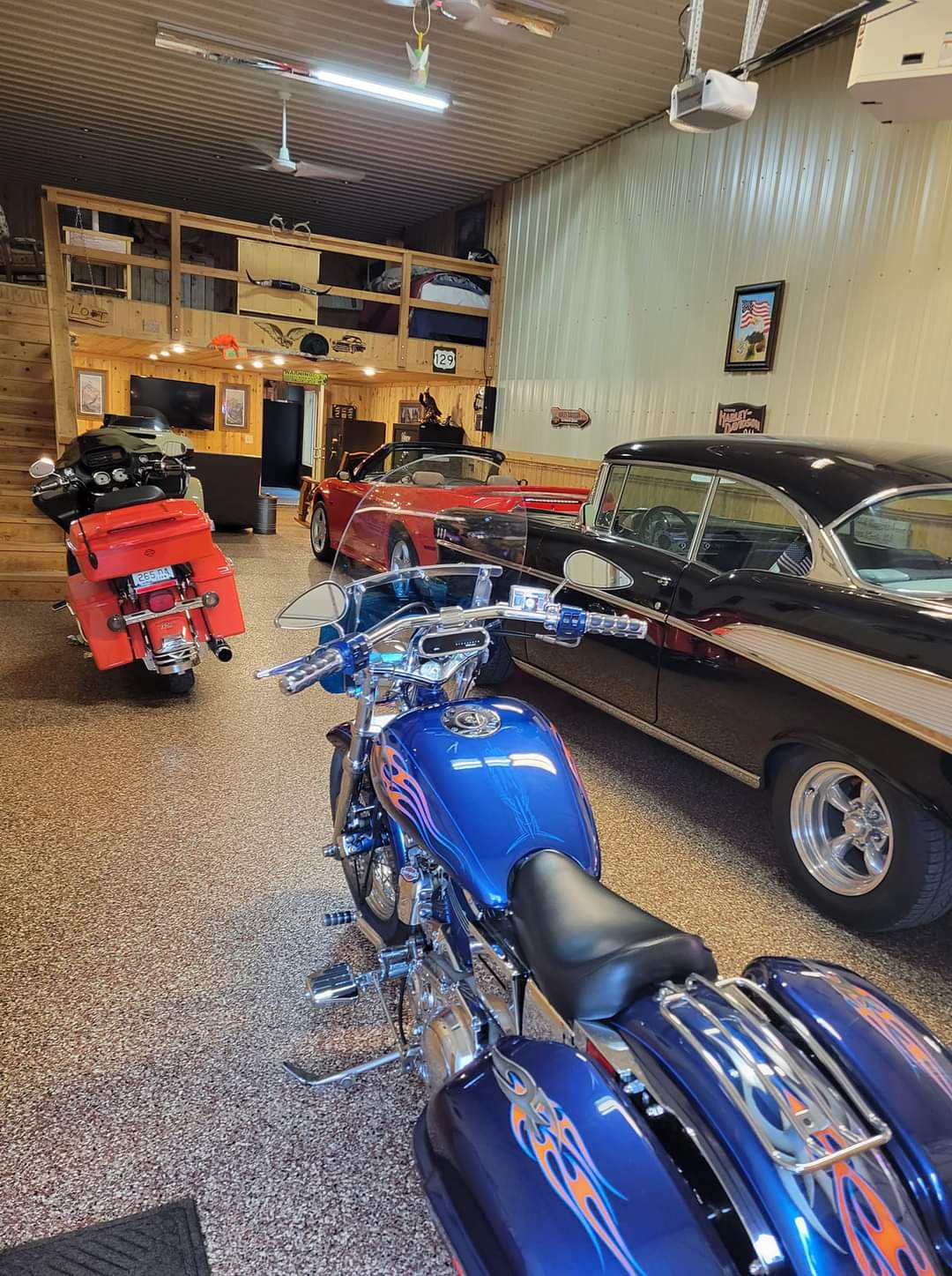
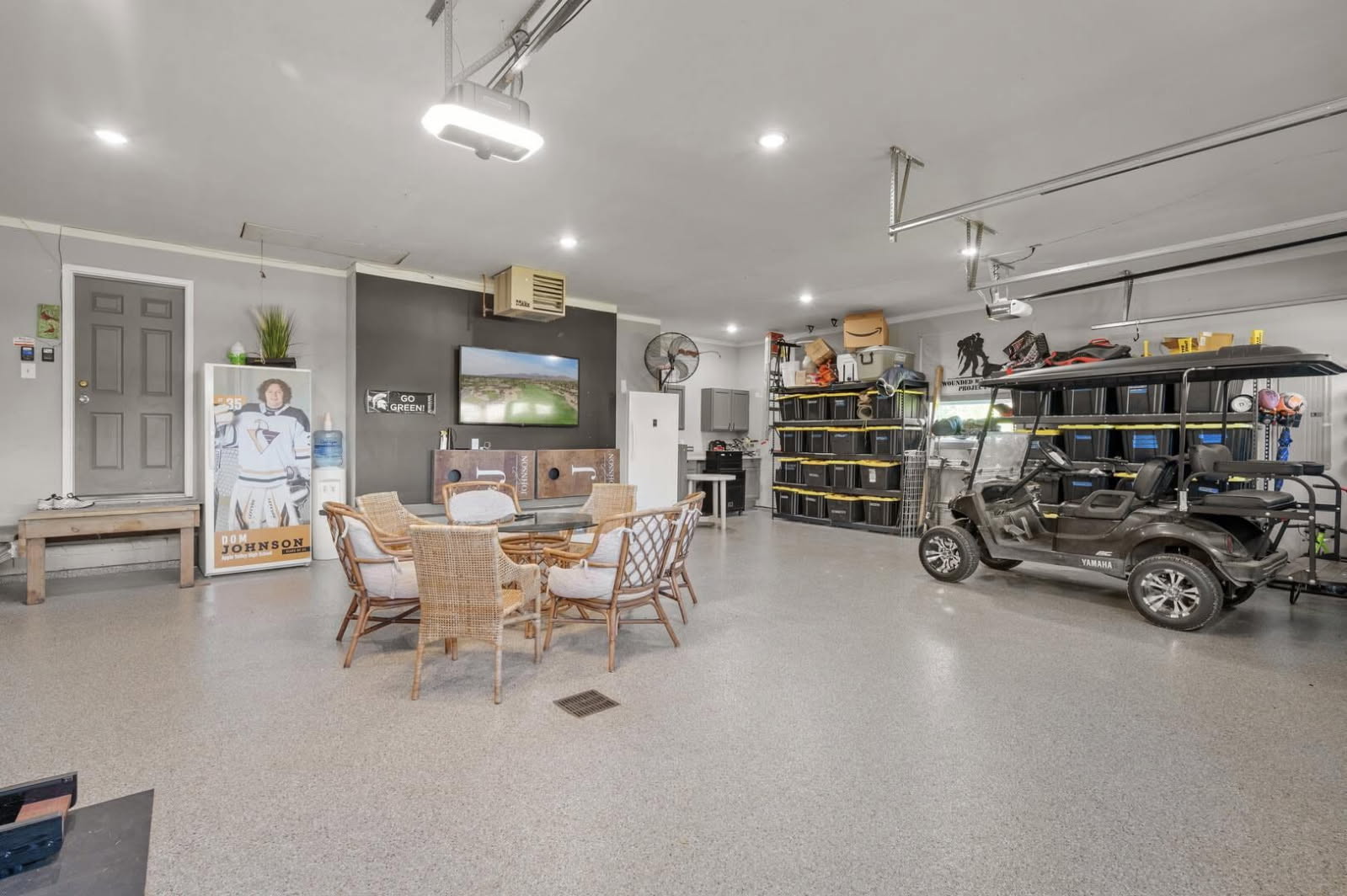
Choose from dozens of flake color blends to match your vision. Lighter blends brighten up naturally dark basements. Darker blends create a sleek, modern feel. We bring physical color samples to every quote — screens never show true colors.
The Installation Process
Basement floor coatings follow the same professional process as every job we do: diamond grinding, crack repair, polyurea basecoat, full flake broadcast, and polyaspartic topcoat. The surface prep matters even more in basements because of the moisture exposure. We never skip the grind.