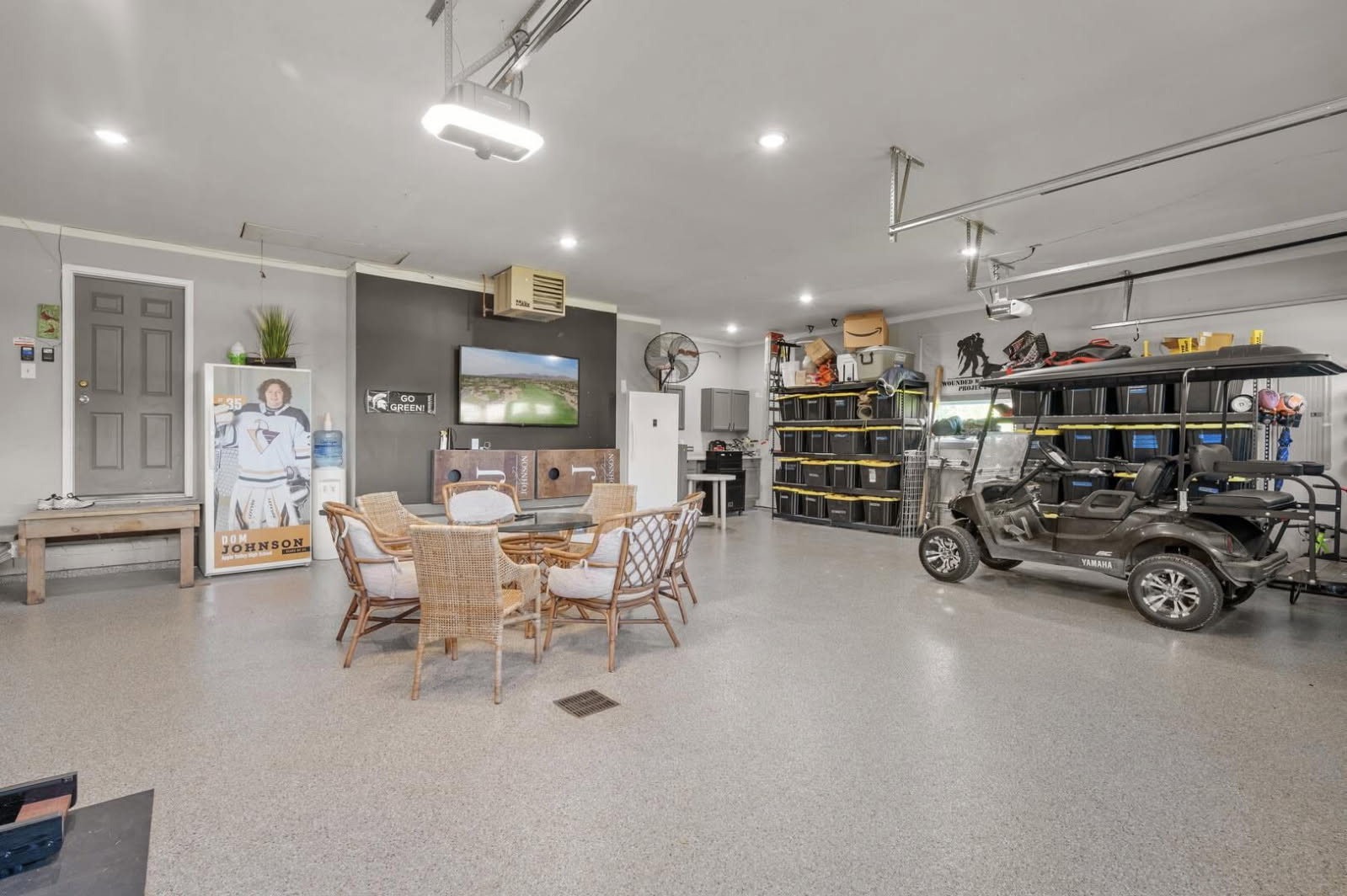
The best time to coat your garage floor in Wisconsin is September through November, with April through June as a strong second window. But with polyaspartic coatings that cure in hours and apply down to 30°F, the real installation season is nearly year-round — if you know what to watch for.
When Should You Coat Your Garage Floor in Wisconsin?
Fall is the ideal window. Temperatures sit in the 50-70°F range, humidity is dropping, concrete moisture levels have stabilized after summer, and you get the floor done before winter salt season. September and October are our busiest months because conditions are nearly perfect.
Spring (April through June) is the second-best window. Temperatures are rising, days are longer, and homeowners are thinking about projects. The one caution: early spring moisture. Snowmelt and rising water tables push moisture through your slab in March and April. MVER must be under 3 lbs per 1,000 sqft over 24 hours (ASTM F1869) for the coating to bond. Dave tests this during the quote visit and will tell you straight if your slab needs a few more weeks.
What Are the Best and Worst Months for Garage Floor Coating?
January-February
Deep winter. Most epoxy companies are shut down because epoxy can't be applied below 50°F and takes 5-7 days to cure. We can still install polyaspartic if your garage can be heated to 40-50°F — a portable propane heater the day before and during installation is usually enough. These are our quietest months: easy scheduling, no wait times.
March
Transition month. Temperatures are unpredictable and moisture levels are spiking from snowmelt. Coating is possible, but MVER testing is critical. Some slabs will be too wet and need to wait for drier conditions.
April-May
Spring ramp-up. Temperatures are reliably workable, moisture is stabilizing. The booking calendar starts filling. If you want a spring install, call in March.
June-August
Summer works well. Warm temps (polyaspartic handles heat fine), manageable moisture, and long days for working light. The downside: everyone wants it done now. Book 3-4 weeks ahead in summer.
September-October
The sweet spot. Moderate temps, low humidity, stable concrete moisture, perfect conditions. Target this window if you can plan ahead — book in August for September installation.
November-December
Late fall and early winter still work. Temps are dropping but usually above our minimum for much of November. December requires a heated garage. Low demand means short wait times and flexible scheduling.
Can You Coat a Garage Floor in Winter?
Yes, with polyaspartic. Epoxy installers shut down for 5-6 months in Wisconsin because their products need sustained warmth. Our polyaspartic topcoat applies at temperatures as low as 30°F, and our TerraMend crack repair cures from -20°F to 130°F. With a heated garage, we work through the winter while competitors are closed.
For the full story on why cold-climate conditions matter for coating chemistry, see our dedicated guide.
Does Spring Moisture Affect Garage Floor Coating?
It can. Wisconsin's spring thaw pushes ground moisture up through concrete slabs. If the MVER exceeds the 3 lbs/1,000 sqft/24hr threshold, any coating applied over that moisture will eventually blister and fail. This is why Dave tests moisture during the quote — not on installation day when it's too late to change course. If your slab is too wet in April, it might be perfect by mid-May. Patience at the front end prevents failure later.
Why Does Polyaspartic Extend the Coating Season?
Two reasons: low-temperature application and fast cure. Epoxy needs 50°F+ air temp for application AND during its 5-7 day cure. One cold night can ruin a $3,000 epoxy job. Polyaspartic cures in hours — the entire system goes down in one day — so you only need acceptable temps for 8-10 hours, not a full week. That extends the practical season by 4-5 months compared to epoxy.
The best time to coat your floor is when you're ready. Fall is ideal, spring is great, summer works, and winter is possible. Call Dave at (715) 307-8302 or get a free quote to get on the schedule.