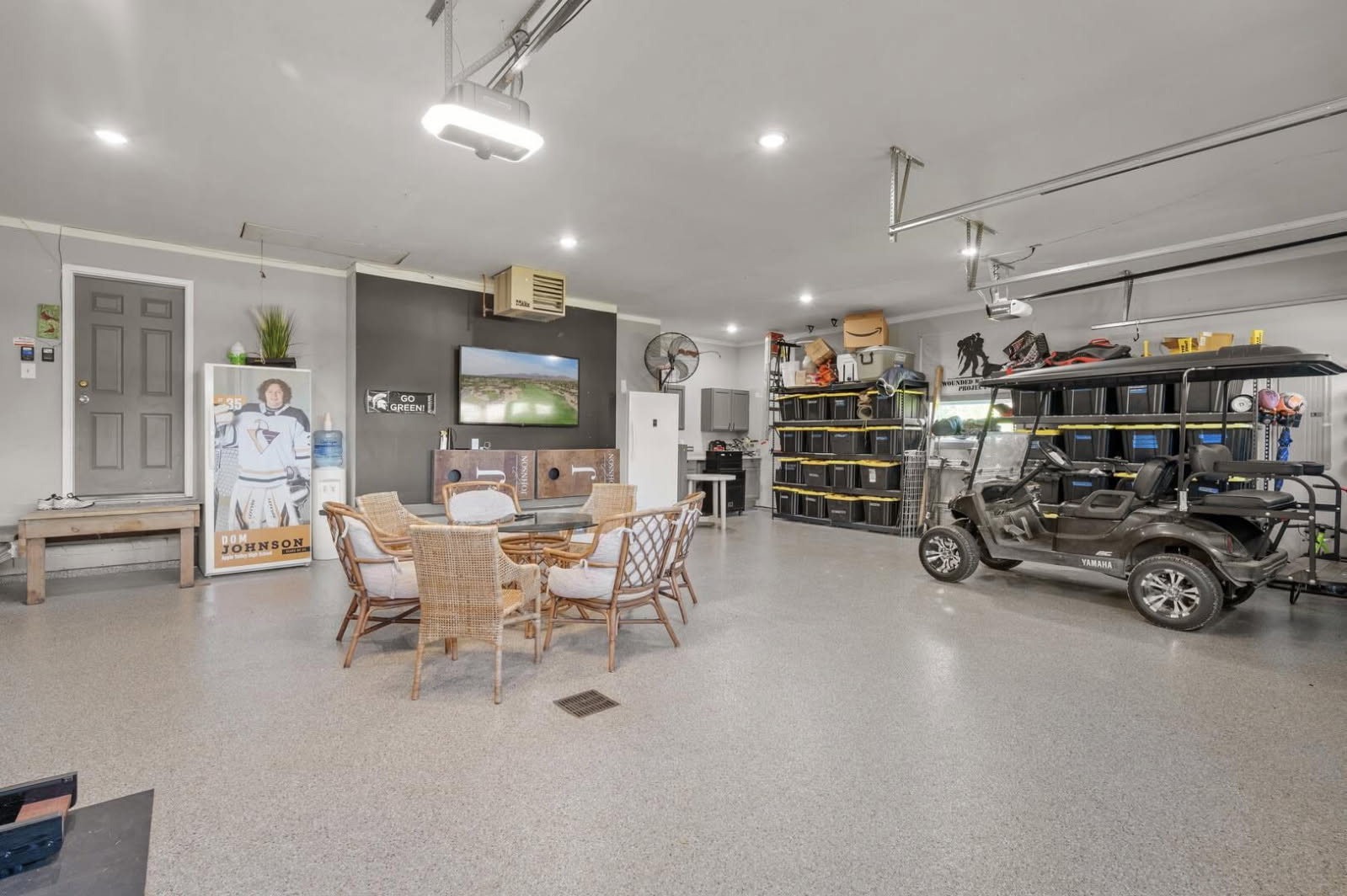
Winter installs scare people. They shouldn't. December through February is actually one of the more flexible seasons on my calendar, and with a heated garage and the right product, I coat floors in the dead of a Wisconsin winter without drama. The chemistry side of this I covered in my cold climate coatings post. This post is about the how: what a winter install day actually looks like.
I'm Dave, owner-operator of All American Concrete Coating in River Falls.
What makes a winter install possible?
Two things. The product and the environment.
On the product side, the Valence Covalent Flake System uses a polyaspartic topcoat that applies down to 30°F. The polyurea basecoat flexes with the concrete as it cycles through temperature changes. TerraMend, my crack and pit repair, cures from -20°F to 130°F. None of this is marketing. I've used it all in January.
On the environment side, I need the garage itself to hold a stable temperature while I work and for about 48 hours after. That's the real conversation for winter.
Do I need a heated garage to get a winter coating?
Heated or heatable. If your garage already runs 40°F or warmer off an attached house, in-slab heat, or a gas unit, we're in good shape. If it's a detached or unheated garage, I bring propane salamander heaters and we warm the space up the day before install.
My target for a winter install:
- Slab surface temperature: 40°F to 50°F.
- Air temperature: 45°F to 55°F.
- Hold for 48 hours after topcoat. This is the key number. Short bursts of heat don't count. The coating needs a stable window to flash and harden.
I walk every winter install with a laser thermometer. I'll check the slab in the back corner, at the door, and under where I'm about to pour. If the slab has been sitting at 20°F for a week, one afternoon of space heater is not enough. We'll run heat longer or push the date.
How does Dave handle portable heat during a winter install?
A few ground rules I follow with propane salamanders and other portable heat:
- Vent it. Propane heaters throw moisture and combustion byproducts. I crack a door or run a duct so the garage doesn't turn into a sauna.
- Position away from the work area. I don't want direct flame wash on fresh product. I'm heating the space, not baking the coating.
- Run it before I arrive if possible. A slab that's been warming for 12 hours behaves better than one I'm heating on the fly.
- Keep it running after I leave. This part is on the homeowner. I'll leave clear instructions for the 48-hour window.
What about insulating the coating while it cures?
On very cold jobs, after the topcoat is down I'll sometimes tent a section or lay down insulating blankets to trap heat near the slab. The goal is to give the polyaspartic a stable environment while it finishes cross-linking. This is an installer judgment call and I don't use it on every job, but in a January install with outside temps in single digits, it earns its keep.
Winter installs are not about fighting the cold. They're about giving the product a warm, stable pocket to cure in. Get that right and the outside temperature is irrelevant.
Why is December through February actually flexible for scheduling?
Because most homeowners still think winter is impossible. My fall calendar fills up in August. My winter calendar has room. If you're the kind of person who plans ahead or you're fed up looking at a salted, spalling floor every time you pull in, winter is wide open.
Common winter scenarios I see:
- New construction closing in December. Homeowner wants the floor done before they move the cars in.
- Attached garage with in-slab heat. Easiest winter install there is. The slab is already at temperature.
- Remodels where the garage just got insulated and sealed. Perfect moment, the envelope is ready.
What does a one-day winter install look like?
Same as any other one-day install, with a longer cure window afterward:
- Arrive early, confirm slab temp, set heat if needed.
- Grind the slab with HEPA-vacuumed equipment.
- Repair cracks and pits with TerraMend.
- Lay down the polyurea basecoat.
- Broadcast the flake to rejection.
- Scrape, vacuum, and roll on the polyaspartic topcoat.
- Hand off heat instructions and leave.
You walk on it the next morning. You park on it in 48 to 72 hours depending on how cold the garage runs. Same floor, same product, same warranty as a September install.
Is winter install more expensive?
Not for most jobs. If I have to bring heavy propane heat and fuel for a detached unheated garage, I'll price that in and tell you about it on the quote. For an attached or already-heated garage, winter is the same price as any other season. Service details are here.
What about moisture in a heated winter garage?
Counterintuitive answer: winter slabs are usually dry. The ground is frozen below the slab, and the warm garage above pulls moisture out, not in. I still run a moisture test before every install, but winter slabs in heated attached garages almost always come in well under the 3 pounds per 1,000 square feet per 24 hours threshold. The one scenario where winter moisture bites is a garage that's been unheated for weeks and then gets rapidly warmed the day of install. Condensation forms on the cold slab as warm air hits it. That's why I like to pre-heat the space 12 to 24 hours ahead instead of showing up to a 20°F garage and cranking heaters for an hour.
Can I use the garage normally during the 48-hour cure window?
You can walk on it the next morning, carefully. I'd avoid parking until 48 to 72 hours depending on how cold you're keeping the garage. And the overhead door stays mostly closed during that window, like I mentioned for late-fall installs. Cold air blasting across a curing topcoat is the one thing I don't want. Quick trips in and out are fine, just don't hold the door open for long stretches.
Why do I actually like winter installs?
Because winter customers have made a decision. They looked at their salt-stained, spalling slab through one more salt season and decided they'd had enough. They planned ahead, cleared the garage, and set up heat. Install day goes smooth because the homeowner is bought in and the garage is ready. Summer installs sometimes feel rushed. Fall installs are busy. Winter installs are calm and I get to focus on doing the work right.
Winter is possible. It's more than possible, it's one of my better windows for homeowners who plan ahead.
Get a free quote or call Dave at (715) 307-8302.