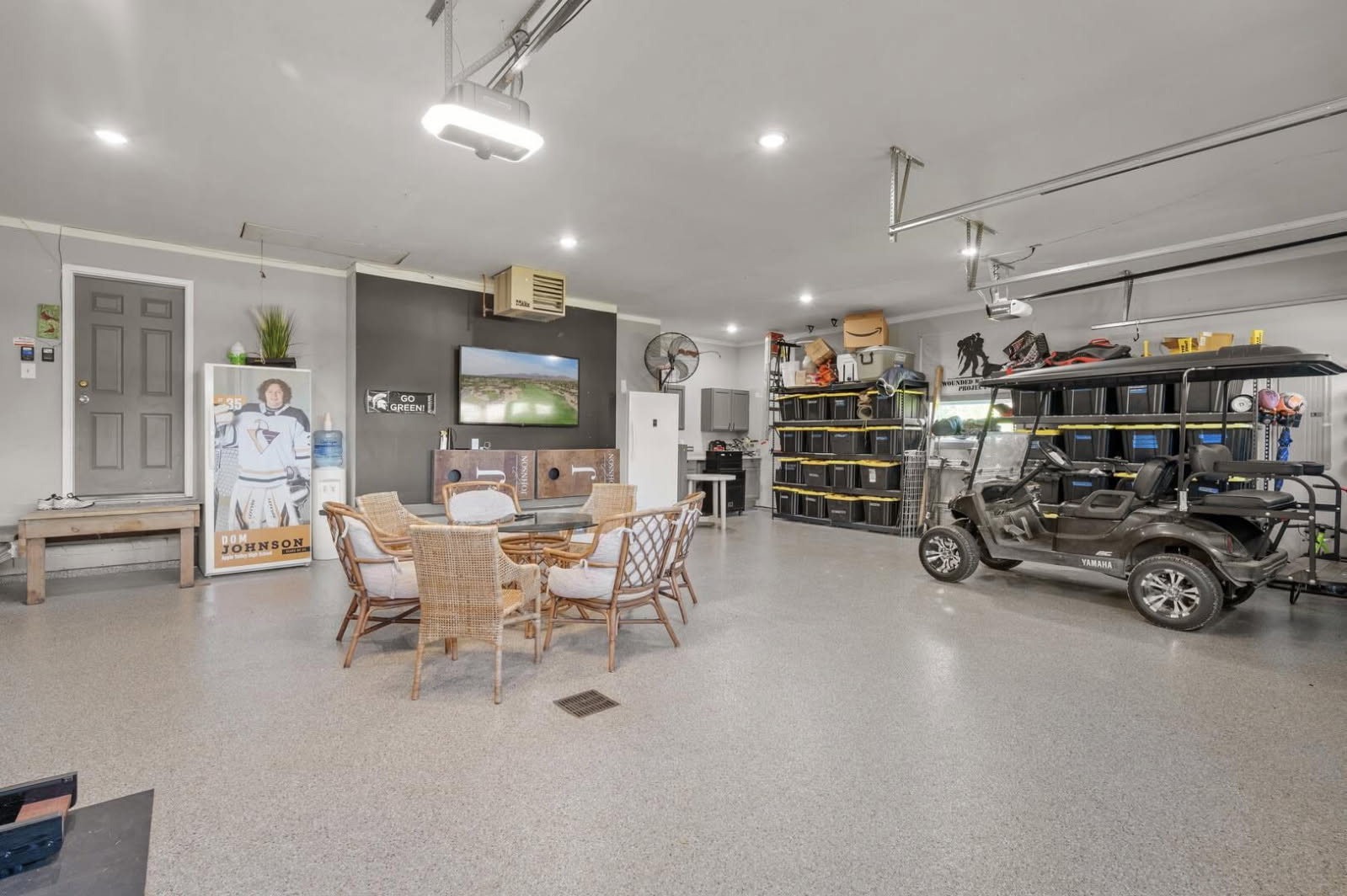
Most people think fall is the only time to coat a garage floor in Wisconsin. Fall is my busiest stretch, no question. But spring, roughly April through June, is a strong second window and in some years it beats fall. You see exactly what winter did to your concrete, the temperatures cooperate, and my calendar is lighter than it is in September.
I'm Dave, I run All American Concrete Coating out of River Falls. Here's why I tell homeowners not to write off spring, and the one thing I always test before I mix a drop of product.
Why does spring work so well for coatings in Wisconsin?
A few reasons line up in April, May, and June that make this window underrated:
- Temperatures hit the sweet spot. Polyaspartic topcoat applies down to 30°F. Epoxy needs 50°F minimum. Spring days in western Wisconsin usually sit between 45°F and 70°F, which is right in the zone where the Valence Covalent Flake System cures the way it's supposed to.
- Winter damage is visible. After 100-plus freeze-thaw cycles and a winter's worth of road salt dripping off your tires, you can finally see every crack, spall, and pop-out. No guessing. I walk the floor with you and we plan the repairs before I quote.
- Humidity is lower than summer. June gets sticky, but April and May are usually dry. Lower ambient humidity means cleaner flake broadcast and no surprises during topcoat.
- My calendar is lighter. Fall fills up fast. Spring I can usually get you in within two to three weeks of the quote.
What is the catch with spring installs?
Moisture. That's the whole catch, and it's a real one.
Wisconsin concrete slabs sit on ground that's been frozen for four months. When it thaws, the water table rises and moisture migrates up through the slab. The industry threshold I work to is 3 pounds per 1,000 square feet over 24 hours of moisture vapor emission rate. Go over that and you're betting against physics. The coating can bond fine on day one and then blister, bubble, or delaminate a few months later.
So in April, before I commit to a date, I'll either run a calcium chloride test or pull a reading with a concrete moisture meter. On older slabs in River Falls, Hudson, Prescott, and out through Somerset and New Richmond, I've seen readings come down fast once the ground settles. On new construction or slabs with bad drainage, I've had to push installs two or three weeks.
I would rather delay your install two weeks than put down a coating that fails in July. That's the whole job.
Does the polyurea basecoat actually help with spring moisture?
It helps a lot compared to old-school epoxy, yes. The polyurea basecoat in the Valence Covalent Flake System has a 674 PSI bond strength and 311% elongation, which means it grips the concrete hard and flexes instead of cracking. It's also chemically resistant to the chlorides that come up with spring moisture and back off car tires all winter.
But none of that overrides the MVER threshold. Moisture-tolerant does not mean moisture-proof. If the slab is sweating, I wait.
What should I do before Dave shows up for a spring install?
Here's what I ask homeowners to knock out ahead of time:
- Empty the garage. Everything out. Shelves, bikes, the lawn mower, the deep freezer. I need the full slab.
- Check your downspouts and grading. If water pools against the garage, that moisture ends up under your slab. Fix it before the coating or you're fighting it forever.
- Leave the door accessible. I bring grinders, a shop vac, and flake broadcast gear. I need room to work.
- Don't pressure-wash the floor the day before. You'd think it would help. It doesn't. It drives water into the concrete and throws off my moisture reading.
I handle the surface prep, the crack and pit repair with TerraMend (it cures from -20°F to 130°F, so cool mornings are not a problem), the basecoat, the flake broadcast, and the polyaspartic topcoat. You can read more about what that looks like on the surface prep page.
When in the spring should I book?
If you want a May install, call me in March. If you want June, call in April. I hold dates in order, and once my spring is full I'm pushing to July, which gets into high-humidity territory.
And if you're on the fence about whether spring or fall works better for your specific situation, the month-by-month guide walks through every window of the year for western Wisconsin and the east Twin Cities metro.
What about coating a garage with a spring parade of water under the door?
If your garage floods at the door every spring thaw, we need to talk about that first. A coating won't fix a drainage problem, and standing water eats at the edge of any coating over time. Sometimes the fix is a simple threshold seal or a regrade at the apron. Sometimes it's a bigger drainage correction at the driveway. Either way, I'd rather tell you about it on the quote visit than pretend it isn't there and have you wondering six months later why the edge is lifting.
How does spring weather affect my install schedule?
Spring in Wisconsin is unpredictable, no other way to say it. I've had 75°F afternoons in April and snow flurries in May. What that means for scheduling is I stay flexible. I watch the forecast the week of your install and if a cold snap or heavy rain is rolling in, I'll reach out about shifting a day. Polyaspartic handles 30°F just fine, so a cool morning is not a problem. What I don't want is a driving rainstorm the afternoon the topcoat is flashing, because that's humidity I can't control.
One benefit of spring over summer: I'm not fighting peak heat, and a cool morning start gives me a long, workable day without racing the clock. Fall and spring both feel calm on install day. Summer mid-afternoons feel rushed.
Is spring pricing any different from fall?
Same pricing. Same product, same crew (me), same warranty. What I do sometimes offer in early spring is a slightly earlier booking slot that wouldn't be available once the fall rush kicks in. If you can plan ahead and you're flexible on your install date, spring is often the easiest season to get a short lead time.
Spring is a good window. Just not a lazy one. Get the moisture right and you get a floor that handles the next ten Wisconsin winters without flinching.
Get a free quote or call Dave at (715) 307-8302.