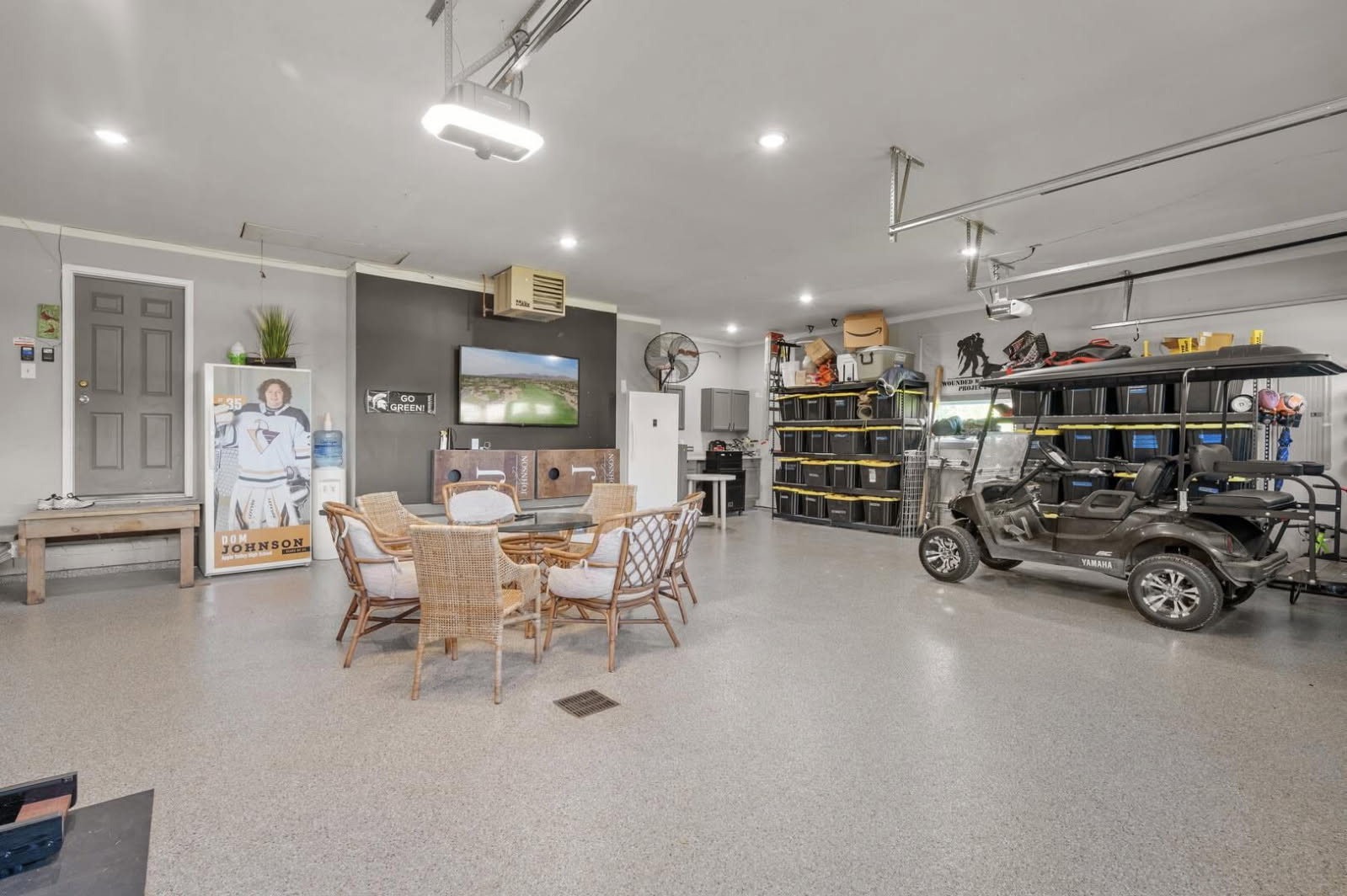
Stillwater homeowners call me with the same question every week: epoxy or polyurea? The short answer is polyurea, and in Stillwater that answer is even more emphatic than usual because of what I see inside Stillwater garages. Old slabs, river-valley humidity, detached buildings with no heat, and historic homes where the concrete has been through 60+ winters already. Epoxy can't handle any of that. I'll walk through why, what I install instead, and what it costs.
Why Is Stillwater a Polyurea Town?
Because Stillwater's housing mix is punishing on a coating. You've got:
- Historic homes along Main Street, up in the hill district, and along the river with detached garages from the 1920s-1950s
- Mid-century builds in Croixwood and Oak Park Heights with 1960s-70s slabs
- Newer construction on the west side and out toward Stonebridge Trail
- Carriage houses and former outbuildings converted to garages, often with thin or uneven slabs
Every one of those buckets has slabs that move with freeze-thaw. The 311% elongation on polyurea means the coating flexes when the concrete moves. Epoxy elongation is closer to 2-3%. Epoxy on a moving slab cracks along every hairline. I've seen it dozens of times. Customers hire a cheap installer, get an epoxy floor, and a year later it's a cracked-up mess that costs more to strip than it did to install.
What Went Wrong With Epoxy in Cold Climates?
Two big things. First, moisture. Epoxy is intolerant of any moisture coming up from below the slab, and Stillwater garages near the river bluff see a lot of vapor migration. Second, temperature. Epoxy wants a 50 degree minimum for install, and most Stillwater detached garages are unheated. Polyaspartic topcoats cure down to 30 degrees F, which means I can install into late fall and start again in early spring when an epoxy installer is still sitting on their hands.
I've written the full comparison in my polyurea vs epoxy breakdown. And if you want a case study on epoxy failures, my DIY epoxy failure post shows what happens when the wrong product meets a Stillwater slab. Same lessons apply whether it's a kit from a big box store or a pro epoxy installer using the wrong product for the climate.
How Does the Valence Covalent Flake System Handle Historic Slabs?
Prep is everything on an old slab. I diamond grind to a CSP 2-3 profile to get past the weak surface layer and into sound concrete. If the slab is cracked, I use TerraMend — it cures from -20 F to 130 F and is ready to grind in 30 minutes, which saves the install day. On a really rough historic slab I may need to do a skim pass or a filled crack grid before the basecoat goes down, but the system is forgiving enough to handle it.
Once the prep is right, the coating goes on: polyurea basecoat (100% solids, near-zero VOC), full flake broadcast, polyaspartic topcoat (85% solids, UV stable). The numbers for Stillwater homeowners:
- 674 PSI bond strength. The concrete fails before the coating does.
- 4x abrasion resistance vs epoxy
- 311% elongation
- 15-year residential warranty, lifetime UV fade warranty
What About Detached Garages with Moisture Problems?
Every Stillwater detached garage I quote gets a moisture test first. The ASTM F1869 threshold is 3 lbs per 1,000 sqft per 24 hours. If the slab is above that, I tell the customer and we figure out the moisture source before I commit to coating. I'd rather walk away than install over a slab that's going to fail in 18 months. A lot of Stillwater garages have no vapor barrier under them because of when they were poured, so this matters more here than in newer subdivisions.
If the moisture is manageable, I proceed. If it's not, I'll say so. That's the job. Sometimes the fix is fixing grading outside the garage. Sometimes it's a French drain along one wall. Sometimes it's a specialty moisture-mitigation primer. I'll walk you through the options even if you end up not hiring me.
What Does Stillwater Pricing Look Like?
Residential work is $7-9 per square foot. A 2-car garage is typically $2,800-$4,500. Stillwater's older detached garages often need more prep — crack repair, spall patching, sometimes a skim coat to level a bad pour. I include that in my quote up front. No surprise invoices on install day. Historic homes in the hill district sometimes need significant prep and can run higher than the standard range, but I'll tell you the number before you commit.
Install Day in a Stillwater Garage
One day from empty garage to walkable floor. I usually start around 7 AM, grind through the morning, do crack repair, lay basecoat around midday, broadcast flake, and topcoat in the afternoon. You walk on it that evening, park on it the next day. I'm out of your driveway before dinner. Read my one-day install walkthrough for the full timeline.
Why Hire Me for a Stillwater Job?
Because I'm a Valence Certified Installer and the drive from River Falls is about 30 minutes. I've coated Stillwater homes from the Victorian district near Chestnut to the newer builds out by Stonebridge. I give straight numbers on the first call and I stand behind every install with a written warranty. No sales rep, no bait-and-switch, no financing games. See my Stillwater service page for more on what I do in town.
Flake Colors for Historic Stillwater Homes
Stillwater's historic aesthetic plays well with warmer flake blends — coffee, bronze, granite, and earth-tone mixes. If you've got a modern build out near Stonebridge, cooler gray blends work better. I bring samples to the quote visit so you can hold them against your house siding, garage door, and trim. Don't pick flake from a website photo — lighting changes everything.
What About Carriage Houses and Converted Outbuildings?
Stillwater has a lot of homes where a carriage house or outbuilding has been converted to garage use. These are often the trickiest jobs because the slabs weren't originally poured as garage floors. Thin pours, no rebar, settled sections, odd transitions. I can coat most of them, but prep is the differentiator. If I have to level a bad section or patch a corner that's crumbling, I'll tell you what it takes and what it costs before I start.
Get a Quote
If your Stillwater slab needs help, call me. Get a free quote or call Dave at (715) 307-8302.