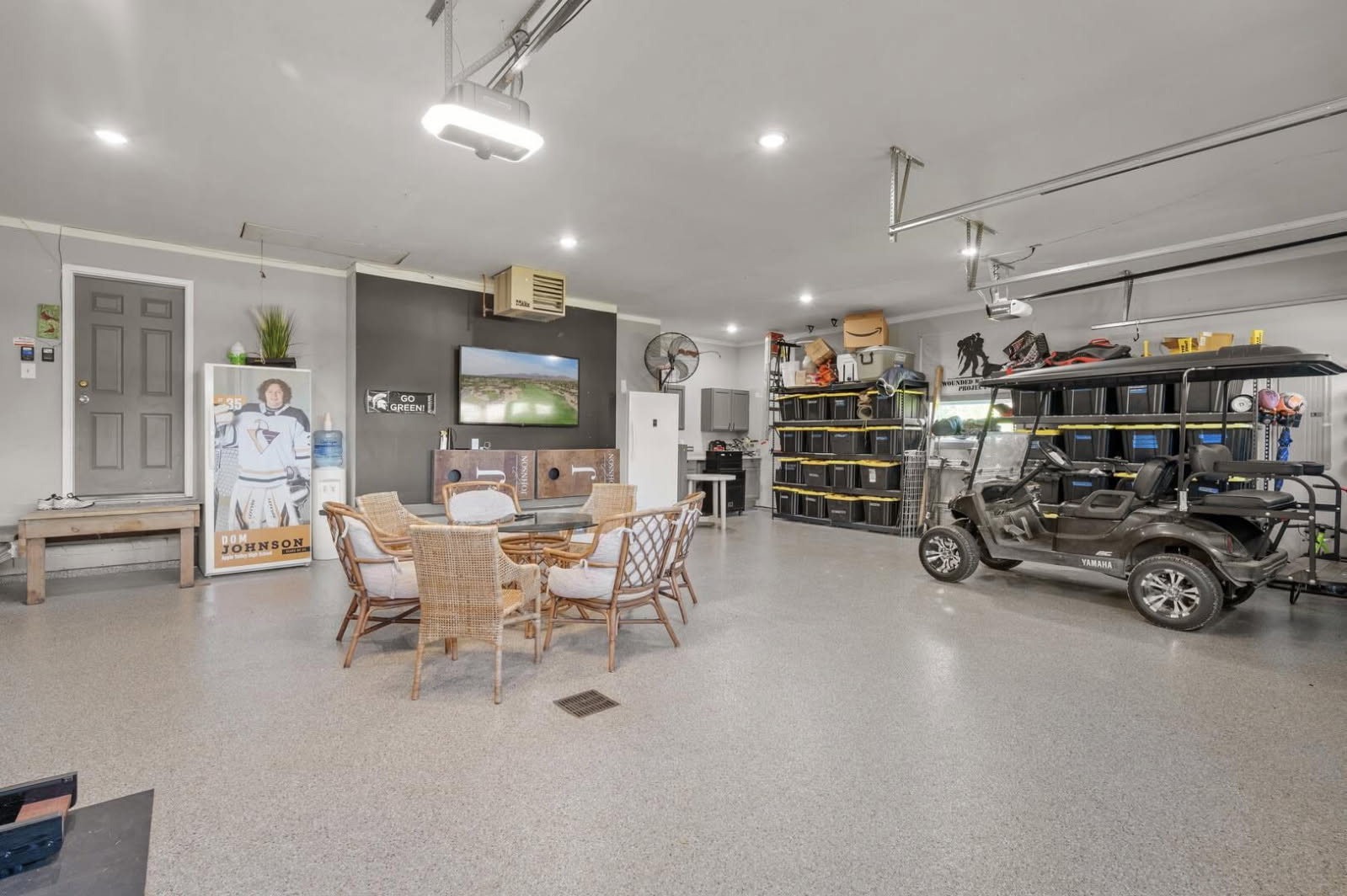
If a homeowner calls me and asks when they should get their garage floor coated, and I only get one sentence to answer, I say September or October. Every year I do more work in those eight weeks than any other two-month stretch on the calendar, and it's not an accident. The weather, the slab, the humidity, and the scheduling all line up. Here's why fall wins in western Wisconsin, and why you need to call me in August if you want in.
I'm Dave, owner-operator of All American Concrete Coating in River Falls.
What makes September and October the sweet spot?
Four things happen at once in Wisconsin fall that make it the best install window:
- Stable daytime temperatures between 50°F and 70°F. This is exactly the range where the Valence polyurea basecoat and polyaspartic topcoat behave their best. No heat stress, no cold stress, predictable flash times.
- Low humidity. Summer humidity has backed off. Ambient moisture in the air is low enough that the flake broadcast settles clean and the topcoat flashes without haze.
- Concrete moisture is stable. The slab has had all summer to let internal moisture migrate out. MVER readings in September are some of the most predictable of the year, usually well under the 3 pounds per 1,000 square feet per 24 hours threshold.
- The floor is about to face winter. You're coating before the salt trucks start running. Maximum return on timing.
Is this different from the month-by-month guide?Yes. My month-by-month guide walks through every month of the year and grades it. This post is specifically about why fall beats every other window, and what that means for booking. If you want the full year view, read that one. If you want to know why my fall calendar is the sharp end of the business, stay here.What does fall humidity actually do for a coating?
Humidity affects a couple of things I watch on every install.
High humidity slows the basecoat flash in unpredictable ways, can leave hazy spots on the topcoat, and makes flake broadcast feel sticky in a way that bites you later. Low humidity means the product lays down clean, cures on schedule, and finishes clear.
A typical September afternoon in Hudson, River Falls, or out toward Menomonie runs around 40% to 55% relative humidity. Compare that to July, when 70% or higher is common. That's not a small difference. That's a full category shift in how the material behaves.
Why is fall slab moisture so reliable?
Spring slabs in Wisconsin sit above ground that just thawed. Water tables are high. I've had April installs where I showed up, tested, and had to come back two weeks later because the MVER was too high.
By September, that slab has had five months of summer to breathe. Internal moisture has migrated out. Unless you have a serious drainage problem against the foundation (which is its own issue), a September slab tests clean the first time. I still test every slab every time, but I get pushed back for moisture in April way more than I do in September.
Fall is the lowest-drama install season I have. The weather cooperates, the slab cooperates, and the product cooperates. That's why it fills up first.
When does Dave's fall calendar actually fill up?
Early. Historically:
- Late July: I start taking early September bookings.
- Mid August: September fills in.
- Late August: Early October fills in.
- Mid September: Late October is booked, and I'm pushing new inquiries to November or winter.
If you're reading this in August and you want a September or October slot, call me this week. If you're reading this in September and wanting October, same advice. I am an owner-operator, I install the jobs myself, and there are only so many days in a fall.
What if I miss the fall window?
You have options, and they're all real options. I coat all winter in heated garages (see the cold climate post for the chemistry). Spring (April through June) is my second-best natural window once moisture tests out. I'd rather install your floor in December than watch you go a whole year on bare concrete.
But if I have my pick, it's fall.
What should I do right now if I want a fall install?
- Call or message me for a quote. I'll come look at the slab and give you a straight number.
- Think about flake color ahead of time. Not required, but it speeds the conversation.
- Clear the garage the week of install. Everything out, give me the full slab.
- Plan to park outside for 48 hours after. You'll be walking on it the next morning and parking by day three.
What's the difference between an early September install and a late October install?
Good question, because people assume the whole fall window is interchangeable. It mostly is, but there are a few nuances.
- Early September: Still warm enough that ambient conditions feel summer-like some days. Humidity can occasionally spike on a late-summer holdover day. Slab is dry, calendar is wide open if you book in August.
- Mid to late September: The absolute sweet spot in my opinion. Stable cool-to-warm days, low humidity, dry slab, long working daylight. If I could pick one two-week stretch for every install I do all year, it would be this one.
- Early October: Cooler mornings, still comfortable afternoons. Polyaspartic behaves beautifully in this range. My favorite install temperature honestly.
- Late October: First frosts possible. I'm watching the forecast more closely. Still workable, still excellent product behavior, but we're edging into late-fall territory where I might need to think about heat for curing.
Any week in that window is a win. The reason I push people to call early is not because one week is better than another, it's because there are only so many install days in eight weeks and I fill them in the order people call.
Is September really worth the rush?
For most homeowners in western Wisconsin and the east Twin Cities metro, yes. You get the best install conditions of the year, you lock the floor in before winter, and you come out the other side of the salt season with a coating that hosed clean instead of a slab that scaled another layer deeper. The math is simple. The catch is booking early enough that I still have a day for you.
Get a free quote or call Dave at (715) 307-8302.